MICAPP
Google Promotion
For SaaS companies evaluating overseas growth, Google Promotion is no longer only about buying traffic or ranking for broad software terms.
It is about choosing the right mix of Ads, SEO, and landing pages that convert qualified demand into measurable pipeline.
As enterprise SaaS buying journeys become longer, Google Promotion must connect acquisition cost, lead quality, scalability, and long-term ROI.
Google Promotion Is Shifting From Traffic Buying To Demand Conversion
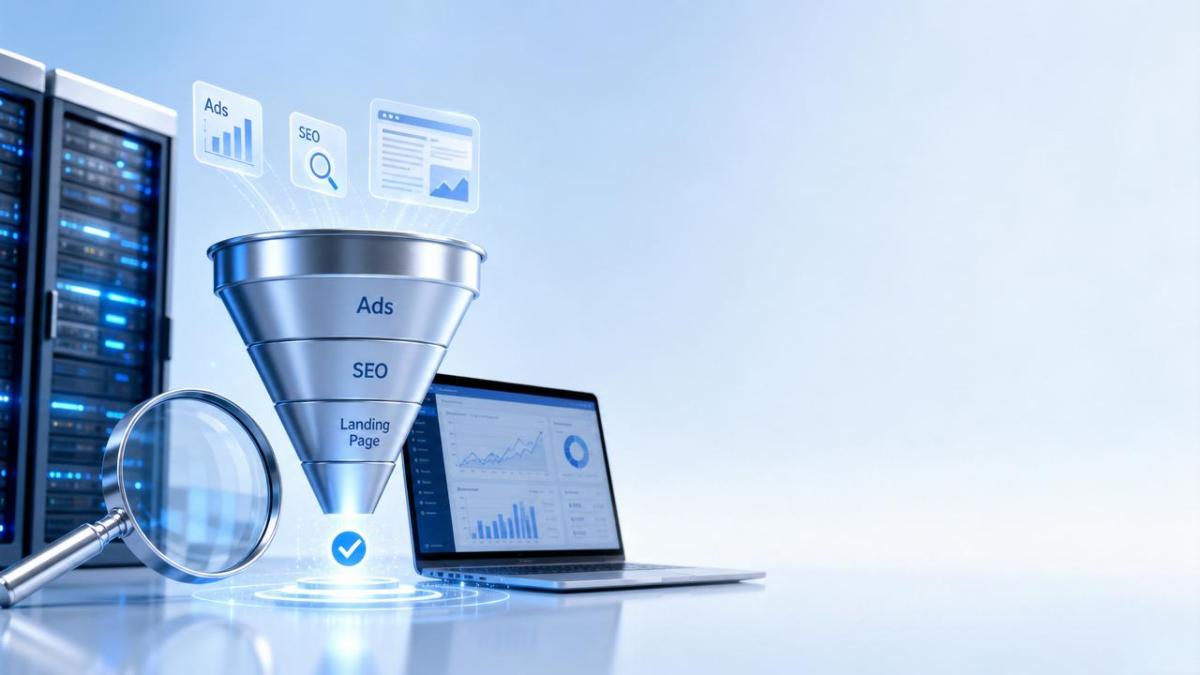
The biggest change in Google Promotion is the move from keyword exposure to full-funnel performance measurement.
SaaS brands now compete on message relevance, page experience, proof, and follow-up speed, not only on bids or rankings.
This matters strongly for enterprise service SaaS, where buyers compare vendors, integrations, data security, localization, and operating costs.
Google Promotion works best when campaigns are connected with product positioning, market research, multilingual content, and analytics.
For cross-border ecommerce SaaS platforms, this connection becomes more important because target markets differ by search behavior and buying maturity.
Current Signals Showing Why SaaS Acquisition Is Changing
Several signals show that Google Promotion is becoming more strategic for SaaS growth.
Search results are more crowded, paid clicks are more expensive, and buyers expect clear proof before booking a demo.
At the same time, AI search experiences are changing how users discover software options and compare service providers.
This creates pressure on SaaS teams to build stronger topic authority, sharper ad targeting, and more persuasive landing pages.
- Paid search requires better conversion tracking and cleaner audience signals.
- SEO must answer detailed buying questions, not only define product categories.
- Landing pages need faster load speed, clearer value, and stronger trust assets.
- Localization affects both keyword intent and conversion confidence.
These signals make Google Promotion a business system, not a disconnected advertising task.
Why Ads, SEO, And Landing Pages Must Be Planned Together
A common mistake is treating Google Ads, SEO, and landing pages as separate projects.
In modern Google Promotion, each channel should inform the others with real data and market feedback.
When these elements work together, Google Promotion becomes easier to optimize and easier to justify financially.
Ad search terms can reveal new SEO topics, while SEO pages can guide ad copy and landing page structure.
Landing page performance then shows which value propositions deserve more budget and content investment.
The Forces Driving Smarter Google Promotion For SaaS
The trend toward smarter Google Promotion is driven by several practical factors.
- Rising click costs: SaaS keywords often attract many competitors with similar offers.
- Longer evaluation cycles: Enterprise software purchases need repeated education and trust building.
- Localization complexity: Overseas markets require adapted language, pricing logic, and proof points.
- Data-driven budgeting: Growth teams need attribution beyond basic form submissions.
- AI-assisted discovery: Content quality and structured information influence brand visibility.
These forces explain why Google Promotion requires both marketing execution and SaaS operating knowledge.
A platform provider with advertising, analytics, translation, and site-building capabilities can reduce gaps between strategy and delivery.
This is especially relevant for companies expanding through independent websites and cross-border ecommerce systems.
How Ads Should Be Chosen When Speed Matters
Google Ads is often the fastest part of Google Promotion because it can test intent within days.
However, fast traffic does not guarantee efficient growth unless campaigns are segmented by buyer stage.
High-intent search campaigns should focus on category, problem, comparison, integration, and solution keywords.
For SaaS, broad traffic may look attractive, but it can dilute budget and reduce lead quality.
Practical ad priorities
- Separate brand, competitor, category, and problem-based campaigns.
- Use negative keywords to filter students, jobs, templates, and low-value searches.
- Connect conversions to CRM stages, not only thank-you pages.
- Test different messages for cost savings, revenue growth, and operational efficiency.
This approach makes Google Promotion more measurable and less dependent on impressions or click volume.
Why SEO Is Still The Compounding Asset In Google Promotion
SEO remains essential because SaaS buyers search repeatedly before contacting a vendor.
They compare workflows, implementation risks, platform features, industry use cases, and long-term support options.
A strong Google Promotion strategy uses SEO to capture these research moments across the full journey.
For enterprise service SaaS, helpful content should explain business outcomes, technical capabilities, and operational scenarios.
- Build pages around solution categories and target industries.
- Create comparison content that explains selection criteria fairly.
- Publish implementation guides that reduce perceived adoption risk.
- Use multilingual SEO to support overseas market entry.
Over time, SEO can lower blended acquisition cost and improve trust before paid campaigns begin.
That makes SEO a long-term foundation inside Google Promotion, not a slow alternative to advertising.
Landing Pages Are Where Google Promotion Proves Its Value
Even strong campaigns fail when landing pages are generic, slow, or disconnected from search intent.
A SaaS landing page should match the keyword promise and answer the visitor’s next question immediately.
The page should clarify who the solution serves, what problem it solves, and why action is worth taking now.
Conversion elements that matter
- A headline aligned with the ad group or SEO query.
- Proof from case outcomes, certifications, partner status, or platform data.
- Clear screenshots, workflow explanations, or product capability summaries.
- Simple forms that balance lead quality with completion rate.
- Fast page speed and mobile-friendly design for international users.
For Google Promotion, the landing page is not only a design asset.
It is a conversion system that connects traffic investment with sales conversations.
Impact Across SaaS Growth Operations
Smarter Google Promotion changes how SaaS teams plan budgets, content, product messaging, and reporting.
Marketing can no longer report only visits, clicks, and rankings without linking them to business outcomes.
Sales teams benefit when forms capture relevant company size, market, pain points, and urgency.
Product teams also gain insights from search queries that reveal unmet demand or unclear feature expectations.
This integrated view helps Google Promotion support sustainable international growth rather than short-term lead spikes.
What To Watch Before Scaling Overseas Campaigns
Before increasing spend, SaaS companies should confirm whether Google Promotion is producing the right kind of demand.
A campaign with low cost per lead may still underperform if contacts lack budget, urgency, or market fit.
- Check which countries produce qualified conversations, not only conversions.
- Review search terms for real business intent and recurring pain points.
- Compare landing page conversion rates by language and device.
- Track assisted conversions from SEO before cutting organic investment.
- Align follow-up workflows with time zones and buyer expectations.
These checks reduce waste and help Google Promotion scale with more confidence.
A Practical Response Framework For The Next Stage
The next stage of Google Promotion should combine automation, analytics, creative testing, and localized market insight.
SaaS providers should also strengthen their technical foundation, including website architecture, data tracking, translation quality, and ad management systems.
A provider with Google and Bing partnership experience can support this process with campaign operations and data analysis.
For cross-border ecommerce SaaS, integrated site building, intelligent advertising, translation, and analytics can make execution more consistent.
Turning Google Promotion Into Measurable SaaS Growth
Google Promotion delivers stronger results when Ads, SEO, and landing pages are planned as one growth engine.
The winning approach is not choosing one channel forever, but matching each channel to intent, timing, and ROI goals.
Start with a focused audit of keywords, campaign structure, page experience, conversion tracking, and international market readiness.
Then build a test plan that compares paid demand, organic opportunities, and landing page performance across priority markets.
With disciplined measurement, Google Promotion can become a repeatable system for qualified leads, stronger visibility, and sustainable SaaS expansion.